

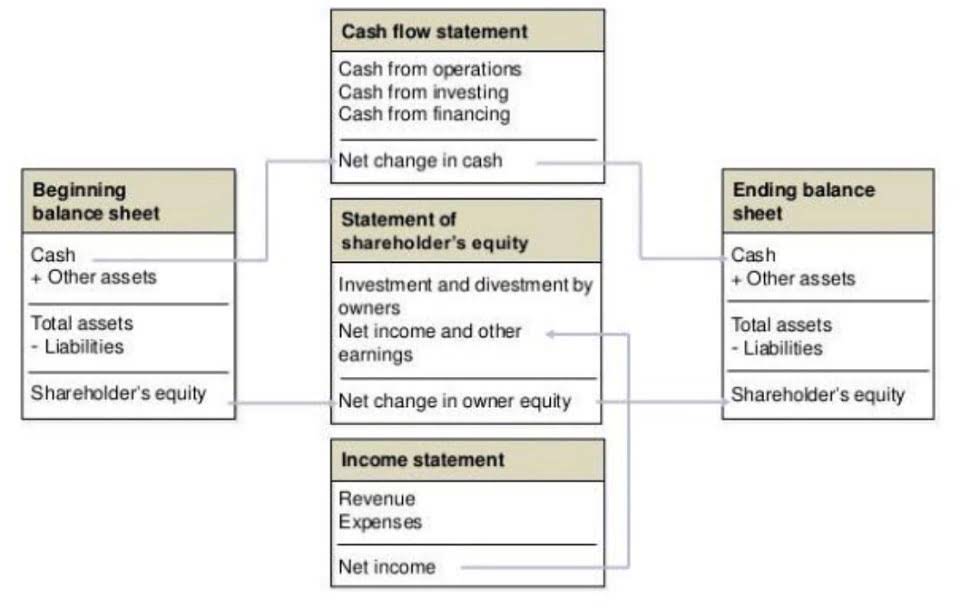
This principle requires accountants to use the same reporting method procedures across all the financial statements prepared. Though it is similar to the second principle, it narrows in specifically on financial reports—ensuring any report prepared by one company can be easily compared to one another. Accountants QuickBooks ProAdvisor must be attentive and thorough when it comes to applying GAAP standards, which are complex and leave room for subjective interpretation and industry-specific considerations. Utilizing accounting software specifically designed to help organizations comply with GAAP can streamline financial reporting processes and help ensure adherence to the standards. These software solutions often come with built-in GAAP templates, automated calculations, and features that facilitate accurate and consistent financial reporting.

How to Avoid Outstanding Checks
- Under GAAP, even specific details such as tax preparation and asset or liability declarations are reported in a standardized manner.
- The problem happens when the goods is damaged, low quality, or wrong specification.
- For “ease” in administering the law, the Court decided to use the state of the owner’s last known address (as evidenced by the holder’s books and records) as the state with the superior claim.
- If the cash balance in your checking account appears to be excessive, it could be due to outstanding checks.
- This also applies to any company that publicly releases its income statement and any other financial documents.
- No matter what incentives drive a company’s decision to maintain GAAP compliance, to do so they typically have to hire professional accountants who are trained in GAAP to conduct internal audits.
- As mentioned above, you may need to return the original check or sign documents confirming the check is lost or destroyed.
A bank reconciliation may contain old outstanding checks, usually because the payees lost them, never received them, or have gone out of business. The first step in doing so is to contact the payee, to see if the check was lost. If so, cancel the original check, reverse the payment transaction in the accounting records, and send the payee a replacement check. You also remove the contingent liability if and when the unclaimed money eventually reverts to the company.
In a bank reconciliation, what happens to the outstanding checks of the previous month?
In conclusion, reconciling outstanding checks is a necessary part of effective financial management. In the following sections, we will discuss these concerns in detail and provide practical strategies to manage outstanding checks effectively. An outstanding check is a check payment that has been recorded by the issuing entity, but which has not yet cleared its bank account as a deduction from its cash balance. According to moneyzine.com, business Z had $200,000 in checks drawn from its general account in December. Business Z discovered a balance of $12,000 in outstanding checks during the November bank statement reconciliation process.
Principle of Utmost Good Faith
- Accountants are responsible for using the same standards and practices for all accounting periods.
- The software matches issued checks with cleared ones, making it easy to spot any that are still pending.
- There are several key pain points in AP, including a lack of transparency and accountability in transactions, inaccurate or incomplete financial data, and unauthorized payments.
- After remitting funds, update your accounting records to reflect the escheatment.
- This means the liability for the funds remains with the issuer, putting their financial reporting and compliance at risk.
THE POTENTIAL UNDISCLOSED LIABILITY In general a loss contingency could result when the holder of unclaimed property determines a potential liability. For example, in some situations a holder may need to estimate the unclaimed property liability; in others, the liability may be readily apparent without resorting balance sheet to estimation techniques. Companies have sought to reclassify these obligations as “miscellaneous income” or make some other financial statement adjustment. This accounting practice conflicts with state unclaimed property laws, which are designed to preserve the property rights of the “lost” owner and prevent unjust enrichment of the company or holders of unclaimed property. States also can statutorily assess interest and penalties, the cumulative effect of which could be material to a company’s financial reporting. For example, assume a holder’s annual unclaimed property audit liability is $50,000.
Keep Records
GAAP is managed and published by the Financial Accounting Standards Board (FASB), which regularly updates the list of principles and standards. It is the U.S. equivalent of the International Financial Reporting Standards (IFRS). Though only regulated and publicly traded businesses are legally obligated to follow GAAP, some private companies also choose to meet the same standards in financial statements. GAAP is meant to ensure consistency, accuracy, and transparency in financial reporting and aims to provide a reliable foundation for investors to make informed decisions.
Outstanding Check: Definition, Risks, and Ways to Avoid
- Always scrutinize financial statements, as there’s potential for manipulation within GAAP’s framework.
- GAAP ensures companies generate clear, comprehensible and comparable financial data regardless of industry, status or affiliations.
- Moreover, adhering to GAAP allows businesses to meet legal requirements and avoid penalties or fines imposed by regulatory authorities.
- When you wrote a check to a vendor and they didn’t deposit it within 180 days, you could simply write off the check and debit the money back to your checking account.
- GAAP requires companies to apply consistent classification methods, without changing them between financial periods.
- This method records transactions only when cash exchanges hands, rather than recognizing revenue or expenses when they are incurred.
The Expedited Funds Availability Act (EFAA) sets forth requirements for banks regarding the processing of checks deposited by customers. This act establishes different rules depending on whether what does outstanding check mean the check is collected or non-collected funds, and it provides various deadlines for check clearance based on deposit type, size, and location. Monitor Your Account RegularlyRegularly monitor your account balance to ensure sufficient funds are available for outstanding checks. By keeping track of your finances, you can avoid accidentally overspending and incurring unnecessary fees or charges. Remember, it’s essential not only to be aware of the funds available but also to recognize which checks have cleared and which are still outstanding. It’s important to note that an outstanding check represents a liability for the payor until it is cashed or otherwise settled.

GAAP rules for outstanding checks
By following the financial reporting standards set by GAAP, businesses can ensure transparencybusinesses can ensure transparency their financial statements. This means these companies’ financial statements must follow all the GAAP principles and meet GAAP standards. Any external party looking at a company’s financial records will be able to see that the company is GAAP compliant, making it both easier to attract investors and to successfully pass external audits. Hiring a professional accounting team trained in GAAP and having internal auditors track and check finances are two ways to ensure your company is meeting GAAP standards.
How To Build A Website For Business

Adherence to GAAP simplifies the process of comparing financial data between different businesses. When preparing a bank reconciliation, outstanding checks are subtracted from the bank’s ending balance to bring it in line with your records. When a business writes a check, it deducts the amount from the appropriate general ledger cash account. If the funds have not been withdrawn or cashed by the payee, the company’s bank account will be overstated and have a larger balance than the general ledger entry. Tracking of payments can be accomplished through the use of checks, which provide both a paper trail and evidence of payment.